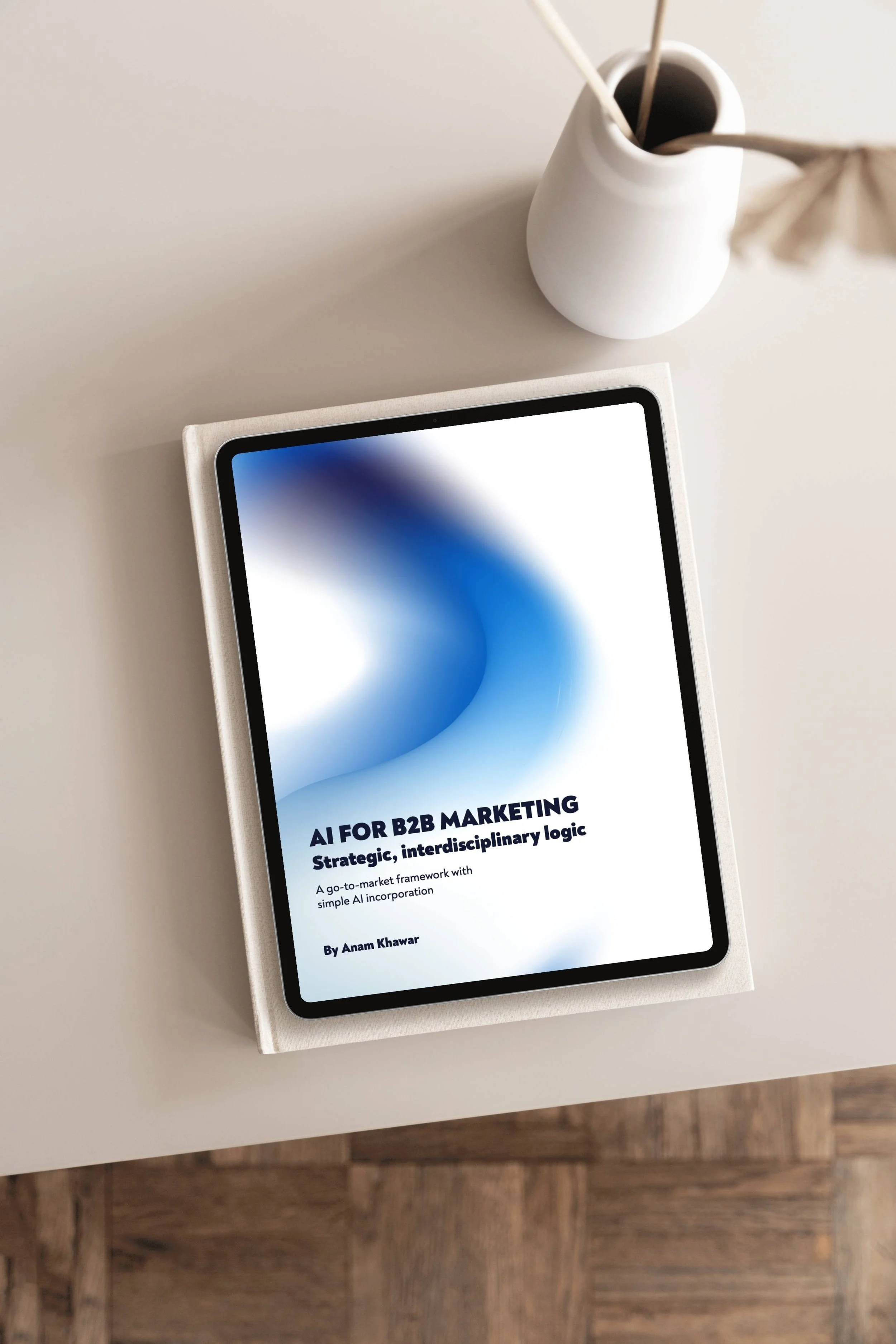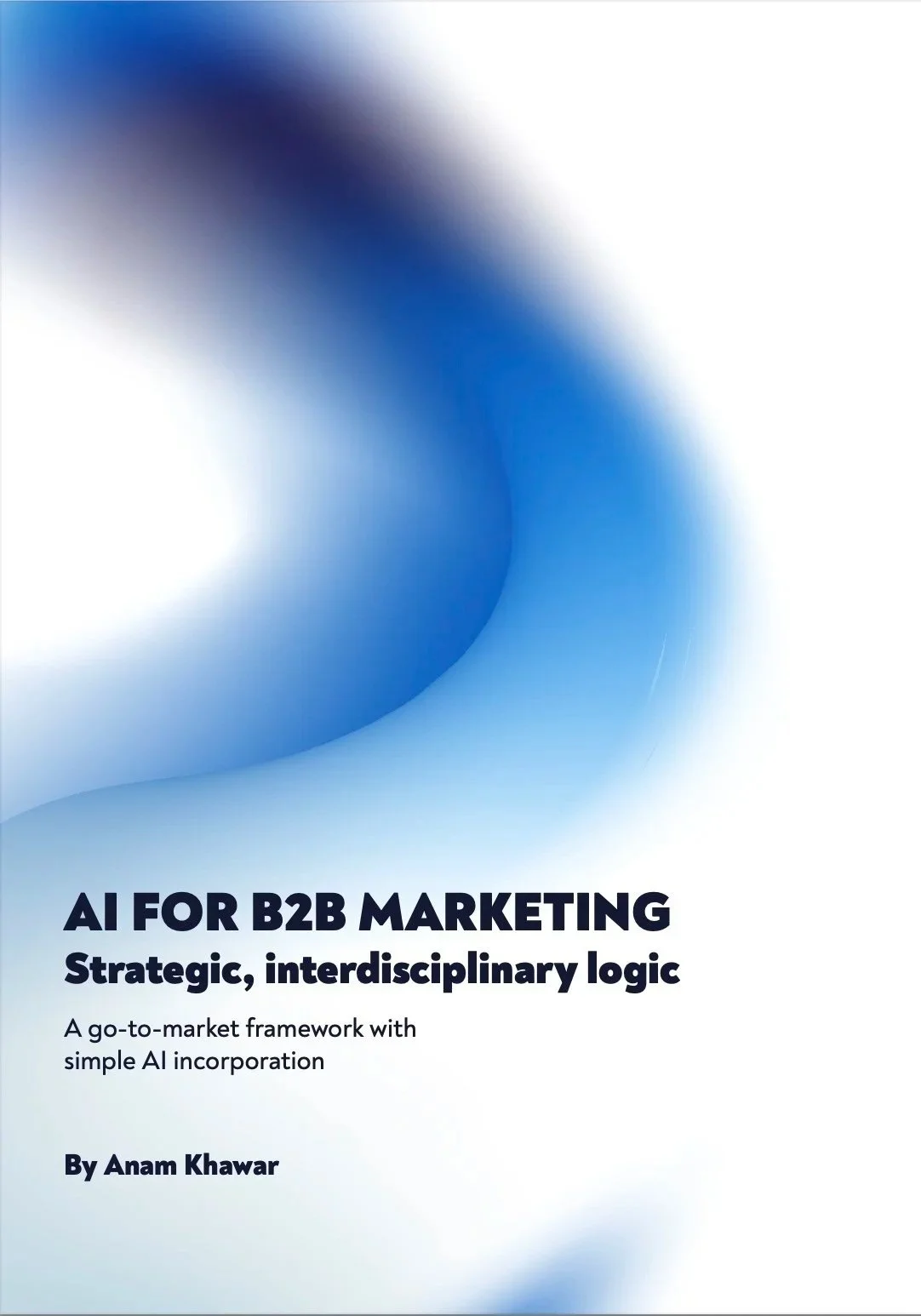
How Enterprises Build AI-Ready GTM Strategy | Executive Handbook

£9.99

AI for B2B Marketing: Strategic, Interdisciplinary Logic introduces a model for building an AI-ready marketing organisation, one where technology reduces fragmentation and enables campaigns to be built at the intersection of organisational capability and market need, translating a company’s real value into positioning that connects meaningfully with its audience.

Designed for CMOs, marketing leaders and growth teams operating in complex enterprise environments, the handbook introduces the Leadership Cadence Model for assessing the kind of leadership required in an AI-enabled environment, alongside an introductory go-to-market framework structured as a sequential yet modular model that can scale across functions while allowing teams to engage with the stages most relevant to their capabilities.

As marketing becomes increasingly shaped by automation, data and rapid experimentation, organisations must move beyond tactical adoption of AI and toward a disciplined strategic cadence.

AI for B2B Marketing: Strategic, Interdisciplinary Logic introduces a model for building an AI-ready marketing organisation, one where technology reduces fragmentation and enables campaigns to be built at the intersection of organisational capability and market need, translating a company’s real value into positioning that connects meaningfully with its audience.

Designed for CMOs, marketing leaders and growth teams operating in complex enterprise environments, the handbook introduces the Leadership Cadence Model for assessing the kind of leadership required in an AI-enabled environment, alongside an introductory go-to-market framework structured as a sequential yet modular model that can scale across functions while allowing teams to engage with the stages most relevant to their capabilities.

As marketing becomes increasingly shaped by automation, data and rapid experimentation, organisations must move beyond tactical adoption of AI and toward a disciplined strategic cadence.


The models in this handbook help organisations:

• Expand market footprint by aligning product value to specific accounts and industries, enabling clearer cross-sell and upsell opportunities.

• Build client-centric go-to-market strategies grounded in real audience needs.

• Deliver speed with precision, producing high-quality work despite limited time and resources.

• Establish strategy before tactics, ensuring AI and campaigns are guided by a market vision.

Together, these principles form the foundation of a marketing organisation capable of operating with clarity, precision and long-term advantage in an AI-enabled business landscape.